
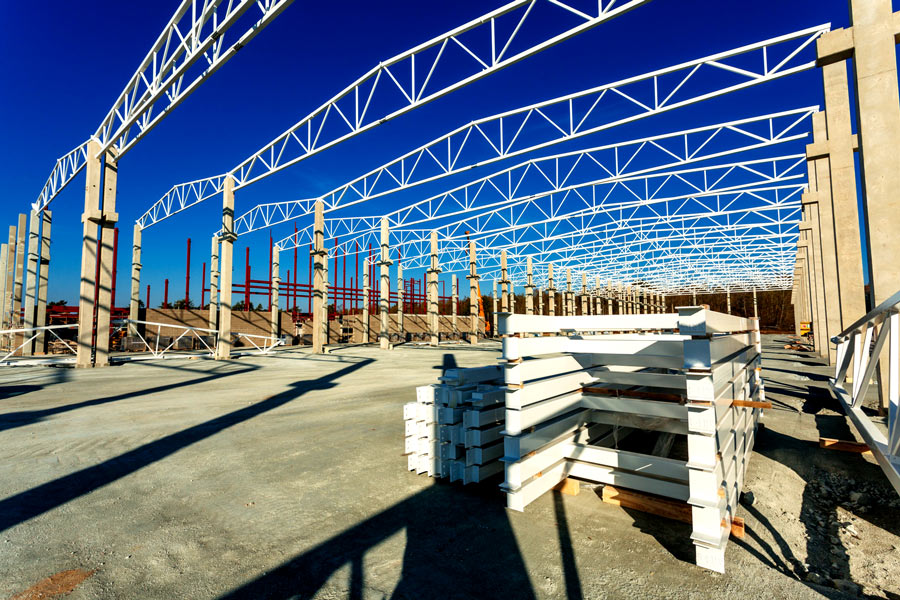
Structural steel framing is one of the most important construction systems used in contemporary civil engineering. Its widespread adoption across commercial, industrial, and residential projects is driven by steel’s high strength, reliability, and adaptability. From towering skyscrapers to expansive warehouses and industrial plants, structural steel frame provide a robust skeleton that supports loads efficiently while allowing architectural flexibility. This article presents a comprehensive discussion on structural steel frames, including their concept, components, design principles, construction methodology, advantages, limitations, and real-world applications.
Concept of Structural Steel Frame
A structural steel frame is a framework of steel members assembled to resist loads and maintain the stability of a structure. The frame acts as the primary load-resisting system, transferring forces from floors and roofs down to the foundations. Unlike traditional load-bearing masonry construction, where walls support the structure, steel frame buildings rely on beams and columns, enabling thinner walls and more usable floor space.
Steel is a predictable and homogeneous material, meaning its mechanical properties are well known and consistent. This predictability allows engineers to design steel frames with high precision and confidence in performance under various loading conditions, including gravity, wind, and seismic forces.
Key Components of a Structural Steel Frame
Columns
Columns are vertical structural members designed to carry compressive loads. In a steel frame, columns support beams, slabs, and other elements and transfer their loads to the foundation. Column design is influenced by factors such as axial load, bending moments, slenderness ratio, and buckling resistance. Common column sections include I-sections, box sections, and hollow structural sections.
Beams
Beams are horizontal members that support floors and roofs. They carry bending moments and shear forces and distribute loads to columns. Steel beams are particularly effective for long spans, which helps reduce the number of columns and creates open, flexible interior spaces. This feature is highly desirable in commercial buildings and industrial facilities.
Bracing Systems
Bracing systems provide lateral stability to the structure by resisting horizontal loads from wind and earthquakes. Without proper bracing, a steel frame may experience excessive sway or instability. Common bracing systems include diagonal bracing, cross bracing, and moment-resisting frames. The choice of bracing system depends on structural requirements, architectural layout, and cost considerations.
Connections
Connections are the joints that link beams, columns, and bracing members together. They play a critical role in the overall behavior of the frame. Connections may be bolted, welded, or a combination of both. Properly designed connections ensure efficient load transfer, structural integrity, and ease of construction.
Floors and Roof Systems
Structural steel frames are often combined with concrete floor slabs to form composite construction. Metal decking is used as permanent formwork, while shear connectors ensure composite action between steel beams and concrete slabs. Roof systems may include steel trusses, purlins, and decking, providing lightweight and durable solutions.
Design Principles of Structural Steel Frames
The design of structural steel frames follows established codes and standards to ensure safety, serviceability, and durability.
Load Assessment
All possible loads acting on the structure are identified and evaluated. These include dead loads (self-weight of structural and non-structural elements), live loads (occupants, furniture, equipment), environmental loads (wind, snow), and seismic loads. Engineers apply load combinations specified by design codes to determine critical conditions.
Strength and Stability
Steel members must have sufficient strength to resist applied forces without failure. Stability checks are essential, especially for slender columns and frames subjected to lateral loads. Buckling analysis and second-order effects are carefully considered in design.
Serviceability Requirements
Serviceability criteria limit deflections, vibrations, and lateral drift to acceptable levels. Excessive deflection can damage finishes, affect building functionality, and cause discomfort to occupants. Steel frame design balances strength and stiffness to meet these requirements.
Durability and Fire Safety
Although steel is durable, it requires protection against corrosion and fire. Protective coatings, galvanization, and fire-resistant materials are commonly applied to enhance durability and ensure compliance with fire safety regulations.
Construction Process of Structural Steel Frames
The construction of steel frame structures is known for its speed and efficiency.
Fabrication
Steel members are fabricated in factories under controlled conditions. Cutting, drilling, and welding are performed with high accuracy, resulting in consistent quality and minimal waste. Prefabrication also reduces on-site labor and construction time.
Transportation and Site Preparation
Fabricated components are transported to the site and stored in an organized manner. Proper planning ensures smooth handling and sequencing during erection.
Erection of Steel Frame
Erection begins with placing columns on prepared foundations, followed by beams and bracing elements. Cranes are used to lift members into position. Temporary supports and bracing ensure stability until the entire frame is completed.
Final Connections and Inspection
Once all members are in place, final bolting or welding is carried out. The frame is inspected for alignment, plumbness, and compliance with design specifications before proceeding with floor slabs and cladding.
Advantages of Structural Steel Frames
Structural steel framing offers several advantages that make it a preferred construction system:
- High Strength-to-Weight Ratio: Steel provides exceptional load-bearing capacity with relatively low self-weight.
- Rapid Construction: Prefabrication and fast erection significantly shorten project timelines.
- Design Flexibility: Long spans and minimal columns allow adaptable and open interior layouts.
- Quality Assurance: Factory-controlled fabrication ensures precision and consistency.
- Sustainability: Steel is recyclable and reusable, supporting environmentally responsible construction.
- Ease of Modification: Steel frames can be altered, strengthened, or expanded with relative ease.
Limitations and Challenges
Despite its many benefits, structural steel framing has certain challenges:
- Fire Protection: Steel loses strength at high temperatures, making fireproofing essential.
- Corrosion Risk: In aggressive environments, corrosion protection and maintenance are required.
- Initial Cost: Steel structures may have higher initial costs compared to some alternatives, though reduced construction time and long service life often offset this.
Applications of Structural Steel Frames
Structural steel frames are widely used in commercial buildings, office towers, industrial plants, warehouses, bridges, airports, and sports facilities. Their ability to support large spans and heavy loads makes them ideal for projects requiring strength, flexibility, and durability.
Conclusion
Structural steel frames are a cornerstone of modern construction, offering an efficient and reliable solution for a wide range of building types. By combining high strength, speed of construction, and design flexibility, steel frames enable engineers and architects to meet complex structural and architectural demands. Although challenges such as fire protection and corrosion must be addressed, the long-term performance and sustainability of steel framing make it an indispensable system in today’s built environment.