
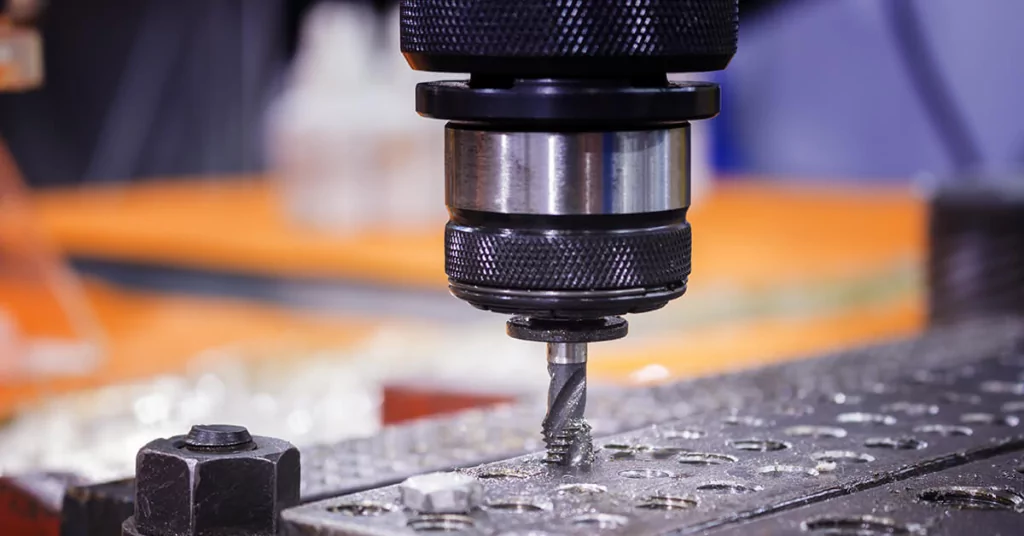
Machining holes in metal is a fundamental process in manufacturing, engineering, and fabrication. Whether for industrial components, automotive parts, or construction materials, accurately drilled and finished holes are essential for proper assembly, strength, and performance. Understanding the tools, techniques, and best practices involved can significantly improve precision, efficiency, and overall results.
Importance of Hole Machining
Holes in metal are used for various purposes, including fastening, alignment, fluid passage, and structural support. The accuracy of these holes directly affects how components fit together. Even minor deviations in size or alignment can lead to assembly issues, reduced strength, or equipment failure.
Because of this, machining holes requires careful planning and the right combination of tools and techniques to achieve the desired specifications.
Common Methods for Machining Holes
There are several methods used to create and refine holes in metal, each suited to different applications and precision requirements.
Drilling is the most common method. It involves using a rotating drill bit to cut into the metal and create a hole. Drilling is widely used because it is fast, efficient, and suitable for a variety of materials.
Reaming is used to improve the accuracy and surface finish of a drilled hole. After drilling, a reamer is used to slightly enlarge the hole and achieve a more precise diameter.
Boring is another method used to enlarge existing holes. It provides high precision and is often used in applications where tight tolerances are required.
Tapping is used to create internal threads inside a hole, allowing screws or bolts to be inserted securely.
Each of these methods plays a role in achieving the desired hole size, finish, and functionality.
Tools Used in Hole Machining
Selecting the right tools is essential for successful hole machining. Drill bits come in various types and materials, such as high-speed steel (HSS), carbide, and cobalt. The choice depends on the type of metal being machined and the required durability.
Reamers, boring bars, and taps are also important tools for refining and finishing holes. Modern machining often involves computer numerical control (CNC) machines, which provide high precision and repeatability.
Using sharp, high-quality tools not only improves accuracy but also reduces wear and extends tool life.
Factors Affecting Machining Quality
Several factors influence the quality of holes in metal. One of the most important is cutting speed and feed rate. Using the correct speed ensures efficient cutting while preventing overheating or tool damage.
Lubrication and cooling are also critical. Cutting fluids help reduce friction, dissipate heat, and improve surface finish. Without proper cooling, tools can wear out quickly, and the metal may become damaged.
Material properties also play a role. Different metals, such as aluminum, steel, or titanium, require specific machining techniques and tool selections. Understanding these properties helps achieve better results.
Achieving Precision and Accuracy
Precision is a key requirement in hole machining. To achieve accurate results, proper setup and alignment are essential. The workpiece must be securely clamped to prevent movement during machining.
Marking and positioning the hole correctly ensures that it is drilled in the right location. In advanced applications, CNC machines use programmed coordinates to achieve high levels of accuracy.
Using pilot holes can also improve precision. A smaller initial hole guides the larger drill bit, reducing the risk of deviation.
Surface Finish and Tolerance
The surface finish of a hole affects its performance and functionality. A smooth finish reduces friction and improves the fit of fasteners or components.
Reaming and boring are often used to achieve better surface finishes and tighter tolerances. In some cases, additional finishing processes such as honing may be required.
Maintaining proper tolerances ensures that parts fit together correctly and function as intended.
Safety Considerations
Machining metal involves potential risks, so safety should always be a priority. Operators should wear protective equipment such as safety glasses, gloves, and appropriate clothing.
Machines should be properly maintained, and tools should be inspected regularly. Ensuring that workpieces are securely fixed reduces the risk of accidents.
Following safety guidelines not only protects operators but also improves the overall efficiency of the machining process.
Common Challenges and Solutions
One common challenge in hole machining is tool wear. Over time, drill bits and other tools can become dull, leading to poor performance and inaccurate results. Regular tool maintenance and replacement help address this issue.
Another challenge is chip removal. Metal chips can accumulate and interfere with the machining process. Using proper cutting fluids and chip evacuation techniques helps maintain efficiency.
Misalignment is another issue that can affect accuracy. Careful setup and the use of precision equipment can minimize this problem.
Advances in Hole Machining Technology
Modern technology has significantly improved the process of machining holes in metal. CNC machines allow for precise control and automation, reducing human error and increasing productivity.
Advanced tooling materials and coatings enhance durability and performance, enabling faster and more efficient machining. Innovations such as laser drilling and electrical discharge machining (EDM) are also used for specialized applications.
These advancements continue to improve the quality and efficiency of hole machining processes.
Conclusion
Machining holes in metal is a critical process that requires a combination of skill, knowledge, and the right tools. From drilling and reaming to boring and tapping, each method plays a role in achieving precise and functional results.
By understanding the factors that affect machining quality and following best practices, manufacturers and engineers can produce high-quality components that meet strict standards. With ongoing advancements in technology, the process continues to evolve, offering greater precision, efficiency, and reliability in metalworking applications.